



BYDALIA FAHMY, LUIS NOÉ-BUSTAMANTEANDJOSEPH COPELAND/ Pew Research Center
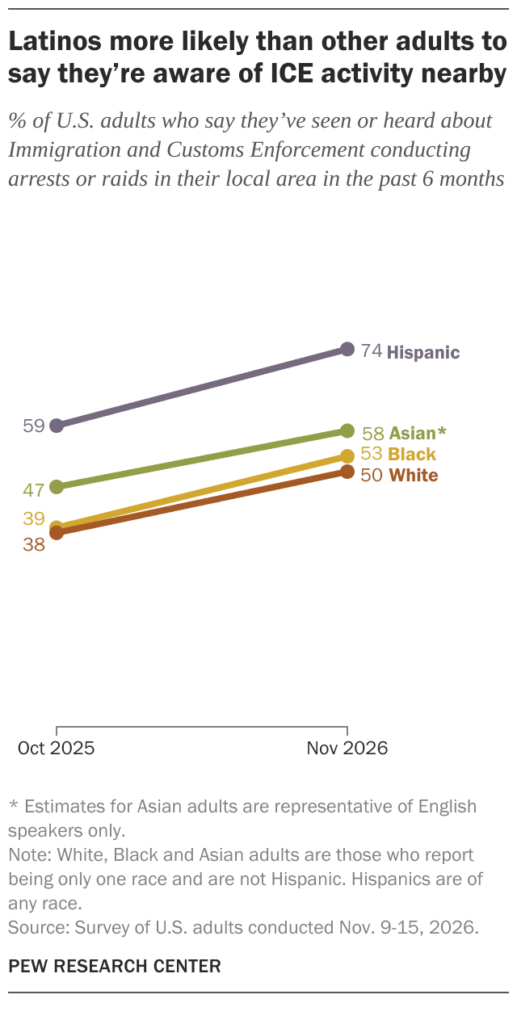
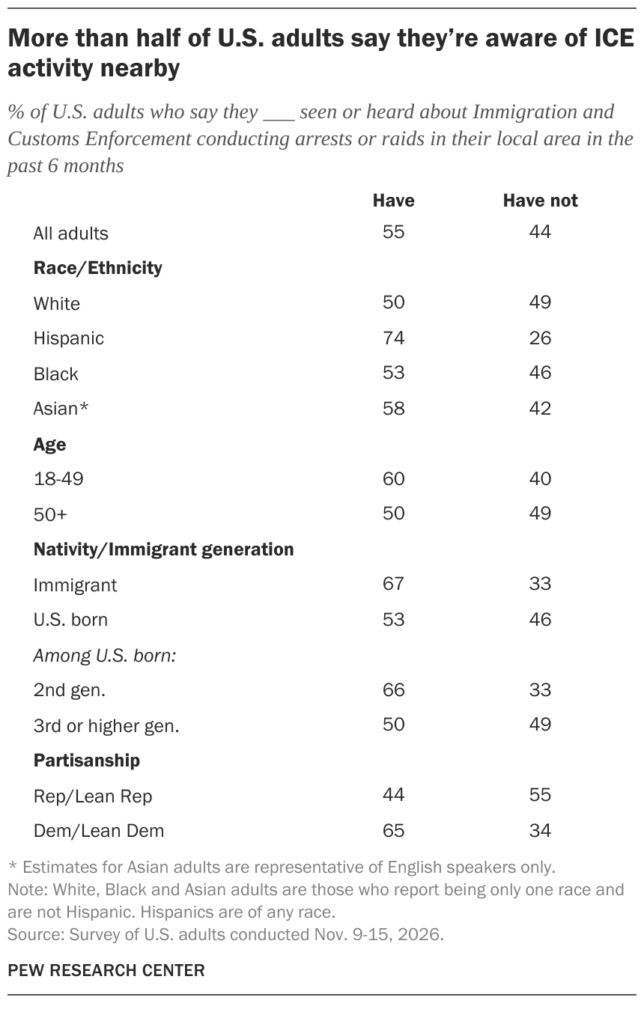
Nearly three-quarters of U.S. Latinos (74%) say they’ve seen or heard of Immigration and Customs Enforcement (ICE) conducting arrests or raids in their local area in the past six months, according to a Pew Research Center survey conducted in November 2026. That’s up from 59% in October 2025.
Asian, Black and White adults have also become more likely to say they’re aware of such activity. Still, Hispanic adults continue to be the most likely to say this.
This increase in awareness comes as President Donald Trump’s administration continues to arrest and deport large numbers of unauthorized immigrantsacross the United States. The vast majority of people detained by ICE are citizens of Hispanic-origin countries, including Mexico, El Salvador, Guatemala and Honduras, according to the Transactional Records Access Clearinghouse.
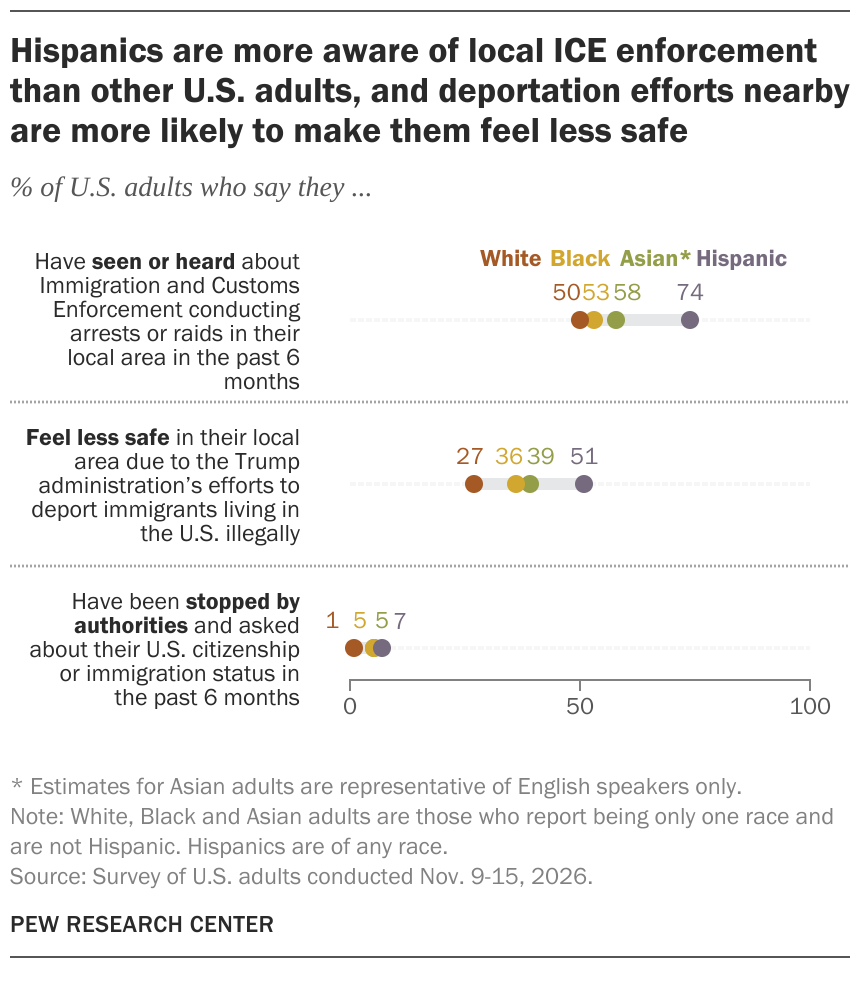
We also asked U.S. adults whether they’ve been stopped by authorities and questioned about their U.S. citizenship or immigration status in the past six months. Similar to last year, Hispanic adults (7%) are about as likely as Black (5%) and Asian adults (5%) to say they’ve been stopped in this way. White adults (1%) are the least likely to say this.
A separate Center survey this fall found that Americans’ views of ICE had grown more negativeover the last year and that the public sees ICE less favorably than other federal agencies and departments. Majorities of Black, Hispanic and Asian adults in that survey expressed a negative opinion of ICE, compared with about half of White adults.
Does ICE activity make U.S. adults feel safer or less safe?
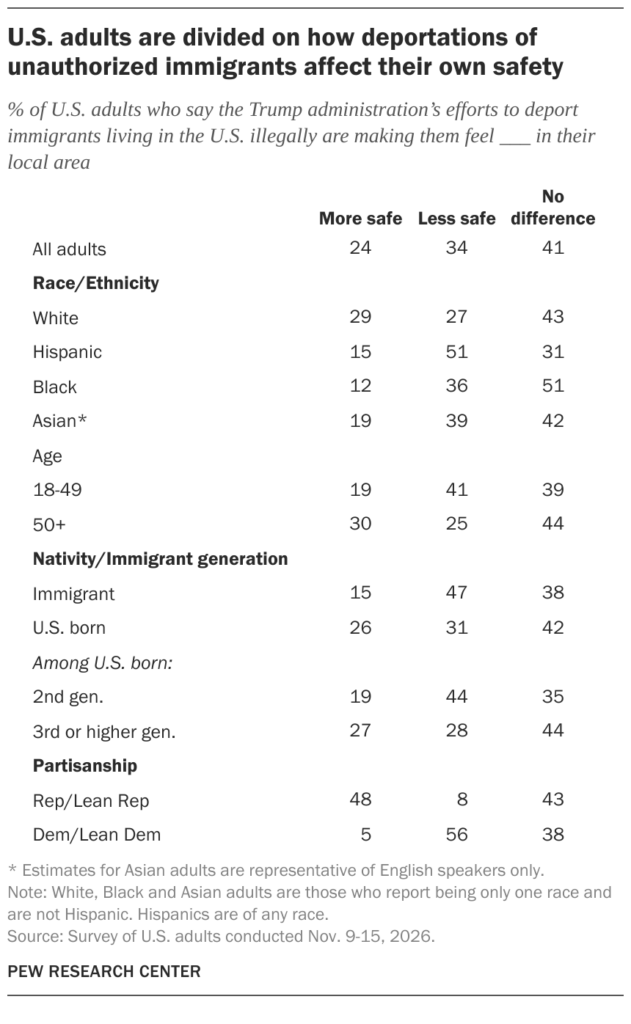
In the more recent survey, 51% of Hispanics say efforts by the Trump administration to deport immigrants living in the U.S. illegally are making them feel less safe in their local area. Relatively few (15%) say these efforts make them feel safer.
Another 31% say the deportation efforts don’t make a difference in how safe they feel. That share is down 9 percentage points from last year.
Hispanic adults are more likely than Asian (39%), Black (36%) and White adults (27%) to say these efforts make them feel less safe. But their views differ by partisanship and nativity.
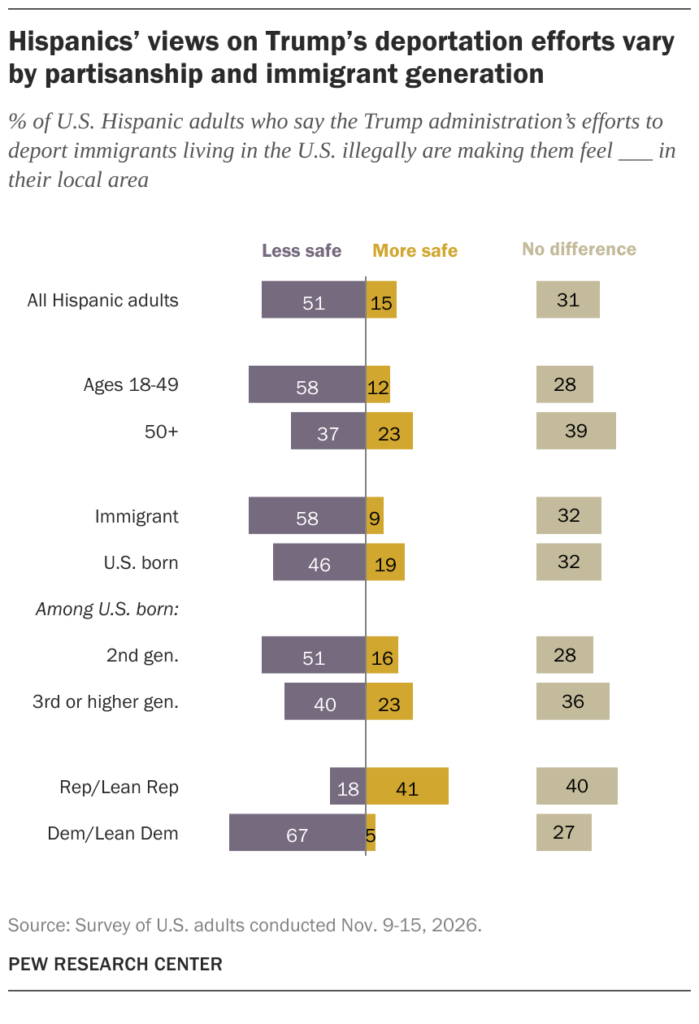
A majority of Hispanic Democrats and Democratic-leaning independents say the deportation efforts make them feel less safe in their local area (67%). Hispanic Republicans and Republican leaners are more divided: 41% say the efforts make them feel safer, while 40% say they don’t make a difference.
Meanwhile, Hispanic immigrants are more likely than U.S.-born Hispanics to say Trump’s deportation efforts make them feel less safe (58% vs. 46%). And among U.S.-born Hispanics, second-generation Americans are more likely than third- or higher-generation Americans to say this (51% vs. 40%).
(Second generation refers to U.S.-born adults who have at least one immigrant parent. Third or higher generation refers to U.S.-born adults who have U.S.-born parents.) For additional views by demographic group, refer to the detailed tables.
What are the legal statuses of Latino adults in the U.S.?
In 2023, the vast majority of U.S. Latino adults (82%) had full legal status, according to Center estimates. That includes Latinos who are U.S.-born citizens (54%), immigrants with naturalized citizenship (15%) and lawful immigrants without citizenship (13%).
Additionally, 18% of U.S. Latino adults were unauthorized immigrants, a group that includes those without full legal status. That’s a higher share than among U.S. adults who are Asian (9%), Black (2%) and White (1%).
Detailed tables
These tables show additional details about how U.S. adults in different groups answered our questions about ICE awareness and feelings of safety.

 WeEvolveIT
