



Designation also granted to the Pacific Coast Highway as the Catalyst Corridor that Launched Safety Corridor Program
FRESNO, CA – California is expanding its efforts to prevent fatal and serious injury crashes with the designation of two new State Priority Safety Corridors (SPSC) in Fresno and Los Angeles counties, advancing a statewide initiative that combines infrastructure improvements, public education and targeted enforcement to make roads safer for all.
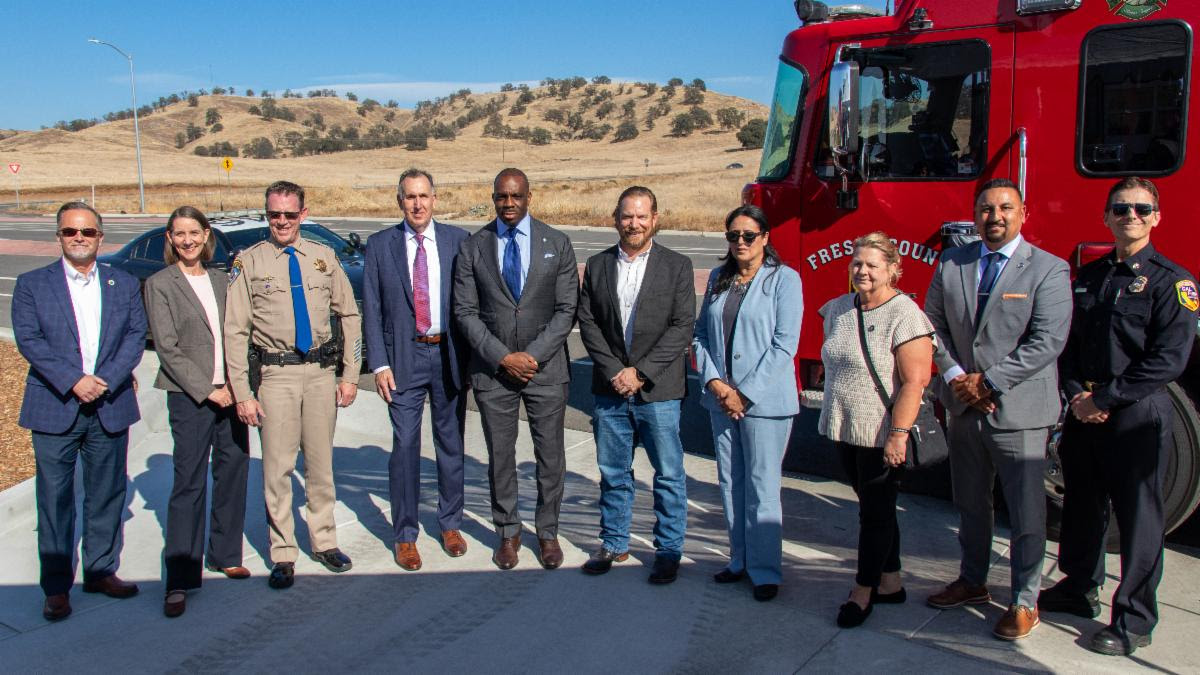
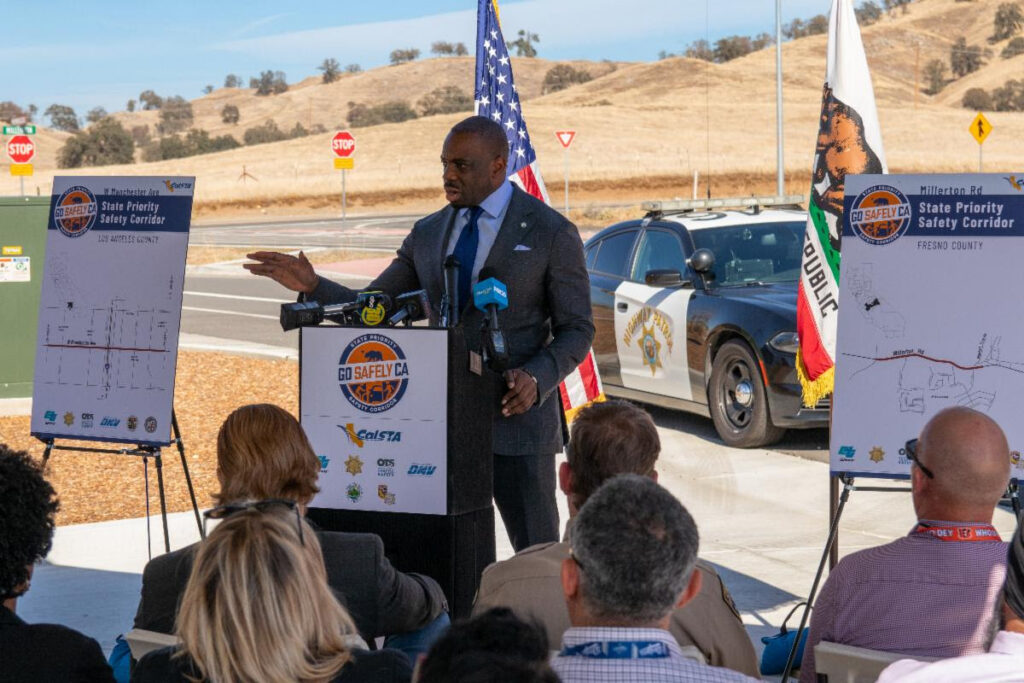
California Transportation Secretary Toks Omishakin joined Caltrans, the California Highway Patrol (CHP), California Office of Traffic Safety (OTS), the California Department of Motor Vehicles (DMV) and local leaders today to announce new corridors along Millerton Road in Fresno County and West Manchester Avenue in Los Angeles County.
The designations build on California’s statewide road safety policy introduced in October 2025 to establish an interim goal of reducing fatal and serious injury crashes by 30% by 2035, with a long-term vision of zero fatalities and serious injuries by 2050.
“The most critical safety investments are the ones that prevent tragedies and save lives,” said California Transportation Secretary Toks Omishakin. “With Governor Newsom’s continued support, the State Priority Safety Corridor initiative directs safety measures that produce immediate, impactful results. With safety improvements that prioritize prevention, we are helping ensure our roads are safer for all users.”
Central Valley: Millerton Road, Fresno County
This winding, rural roadway serves residents, visitors to Millerton Lake, the Table Mountain Rancheria tribal area, and emergency vehicles responding to incidents in the area.
“I appreciate the State’s commitment to meaningful action that immediately addresses safety concerns on vital corridors like Millerton Road,” Fresno County Supervisor Nathan Magsig said. “We’ve witnessed too many fatalities along this corridor, and the County is committed to working with all of our partners to ensure every trip is a safe one.”
“Firefighters know all too well the need for improved safety outcomes on our roads when responding to serious and fatal traffic crashes,” Fresno County Fire Deputy Chief Ryan Michaels said. “Preventing crashes from happening in the first place allows us to further protect and serve the Fresno County community by responding to other emergencies.”
Southern California: West Manchester Avenue, Los Angeles County
A 4.08-mile stretch of West Manchester Avenue, from South Van Ness Avenue to Compton Avenue, is the newest SPSC in South Los Angeles and the unincorporated Los Angeles County community of Florence-Firestone.
“Safety is central to our Vision Zero commitment. Los Angeles County has worked across departments to make W. Manchester Avenue and Firestone Boulevard safer for everyone who walks, bikes, drives, or uses transit. We appreciate the partnership of the California State Transportation Agency as we continue advancing safety improvements along our busiest corridors,” said Los Angeles County Supervisor Holly J. Mitchell.
Bay Area: Interstate 880, Alameda County
The new designations follow last week’s announcement of the Bay Area’s first SPSC along nearly 10 miles of Interstate 880 (I-880) between Union City and San Leandro in Alameda County.
The heavily traveled I-880 corridor serves commuters, freight operators and surrounding communities, connecting residential neighborhoods, and major transportation routes throughout the East Bay.
Pacific Coast Highway: A Catalyst for Statewide Action
California is also reaffirming its commitment to improving safety along Pacific Coast Highway (PCH), which helped inspire the State Priority Safety Corridor initiative.
On October 17, 2023, Pepperdine University students Niamh Rolston, Peyton Stewart, Asha Weir and Deslyn Williams were killed after being struck by a speeding driver while walking along PCH in Malibu. This tragic event galvanized local and state leaders to accelerate road safety efforts on PCH and rethink approaches to address safety on roads statewide.
The 28.2-mile PCH Catalyst Priority Safety Corridor extends from McClure Tunnel in Santa Monica to the Ventura County line.
In 2023, CalSTA brought together the CHP, Caltrans, OTS and the DMV with local partners to collaborate and work together to make the corridor safer. The immediate safety makeover on PCH in Malibu served as a model of coordinated collaboration and safety investments.
“Safety will always remain Caltrans’ highest priority in everything we endeavor, and priority safety corridors will save lives by providing long-term, comprehensive enhancements that target the underlying causes of serious crashes,” said Caltrans Director Dina El-Tawansy. “Making tangible improvements to infrastructure in high-risk corridors and throughout the state will help protect the traveling public and create a safer highway system for all Californians.”
“This project directs data-driven enforcement to the areas where it can have the greatest impact: corridors where lives are at risk. In close collaboration with our state and local partners, we are holding drivers accountable for dangerous driving behavior, preventing serious and fatal crashes, and helping everyone who travels these roads arrive home safely,” said CHP Commissioner Sean Duryee.
“Behind every preventable crash is a family forever changed by the loss or serious injury of a loved one,” said OTS Director Stephanie Dougherty. “It takes a collective effort from all of us – individuals, communities, local and state traffic safety leaders – to build a culture of safety where getting to and from places safely is always the expectation. As we go about our daily activities, think of every road you travel on as a safety corridor.”
“PCH is the road every Malibu resident depends on, and this designation tells them the State is paying attention,” said Malibu City Manager Joe Irvin. “We’re grateful to Secretary Omishakin and Caltrans, and to Michel Shane and The Emily Shane Foundation for bringing this effort to the city. Malibu will keep working with the State until the improvements show up on the highway itself.”
“Our daughter Emily was killed on PCH in 2010, and four Pepperdine seniors died on the same highway in 2023, at no fault of their own. My wife and I are grateful to Secretary Omishakin for doing several site visits and engaging with the community first-hand,” said Michel Shane of the Emily Shane Foundation. “The road that taught Californians what a deadly highway costs will now show them what a safe one looks like.”

Coordinated Safety Improvements
The SPSC initiative combines public education, enhanced enforcement and other proven safety measures at the local, regional and state level to help guide future safety activities and address factors contributing to fatal and serious injury crashes.
Planned safety improvements may include:
- Complete Streets Improvements: Protected bike lanes, curb extensions, pedestrian refuge islands and improved medians.
- Roadway Improvements: Centerline rumble strips, new pavement markings, and a roundabout at Winchell Cove Road in Fresno County.
- Vision Zero Safety Elements: Curve warning signs with flashing beacons, speed feedback signs and emergency vehicle hybrid beacons.
- Public Education: Public awareness campaigns, education and community outreach to encourage safe road behaviors.
- Enhanced Enforcement: Operations that focus on the most dangerous driving behaviors that put people biking and walking at risk, such as speeding.
- Wrong-Way Driver Prevention: Upgraded wrong-way signs and red reflective pavement markers.
The SPSC selection was determined using a High Injury Network methodology developed with UC Berkeley’s Safe Transportation Research and Education Center (SafeTREC). The methodology evaluated crash data from 2020 to 2024 on public roadways, including state highways, city streets and county roads, to identify locations with elevated concentrations of fatal and serious injury crashes.
Progress will be measured through reductions in fatal and serious injury crashes. Additional indicators, including vehicle speeds, roadway conflict points and available traffic data, will help identify emerging risks and guide future safety improvements.
For more information about the SPSC initiative and corridor fact sheets, visit the CalSTA Enforcement and Safety webpage.
For more information on California’s infrastructure investments, visit build.ca.gov.


 WeEvolveIT
